AI for Research
How Can Researchers Use AI Without Crossing Ethical Lines? 6 Practical Rules
AI can genuinely speed up research — but it also brings fabricated citations and ethical risks. Six practical rules for researchers and graduate students using AI responsibly.

Many researchers already use AI — to explore ideas, summarize papers or polish language. The real question is no longer whether to use it, but how to use it while staying rigorous and credible.
Here are six practical rules for getting the benefits of AI without losing academic integrity.
1. Let AI assist — never author
AI can help brainstorm, structure or refine language. But the core ideas, research design and conclusions must come from the researcher. Many publishers and COPE are explicit that AI cannot be an author because it cannot be accountable for the work.
2. Verify every citation yourself
Generative AI tools can produce references that look convincing but do not exist. Every source you cite should be found in an academic database, and you should have read what you are citing.
3. Protect participant data
Do not paste raw, identifiable data — interview transcripts or survey responses — into external AI tools unless your ethics approval allows it. Remove identifying details first.
4. Disclose AI use according to policy
Journals and institutions differ: some ask for disclosure in the methods section, others in the acknowledgements. Check the policy before you submit, and keep a record of where AI was used.
5. Make analysis reproducible
AI can explain statistical ideas such as CFA or SEM, or help write code, but the actual analysis belongs in reliable software such as SPSS or AMOS — and it must be reproducible. Results that cannot be reproduced do not belong in research.
6. Interpretation is the researcher's job
Numbers tell you what happened. Explaining what it means requires understanding the context, the theory and the limitations of the study — and that responsibility stays with the researcher.
Summary: where AI fits
| Research stage | AI can help with | The researcher must |
|---|---|---|
| Literature review | Exploring ideas, grouping themes | Read originals, verify citations |
| Research design | Prompting questions, suggesting options | Decide the framework and method |
| Data analysis | Explaining concepts, drafting code | Run, check and interpret the analysis |
| Writing & publication | Language, consistency checks | Write the findings, disclose AI use |
AI can make research faster. Credibility still comes from the researcher.
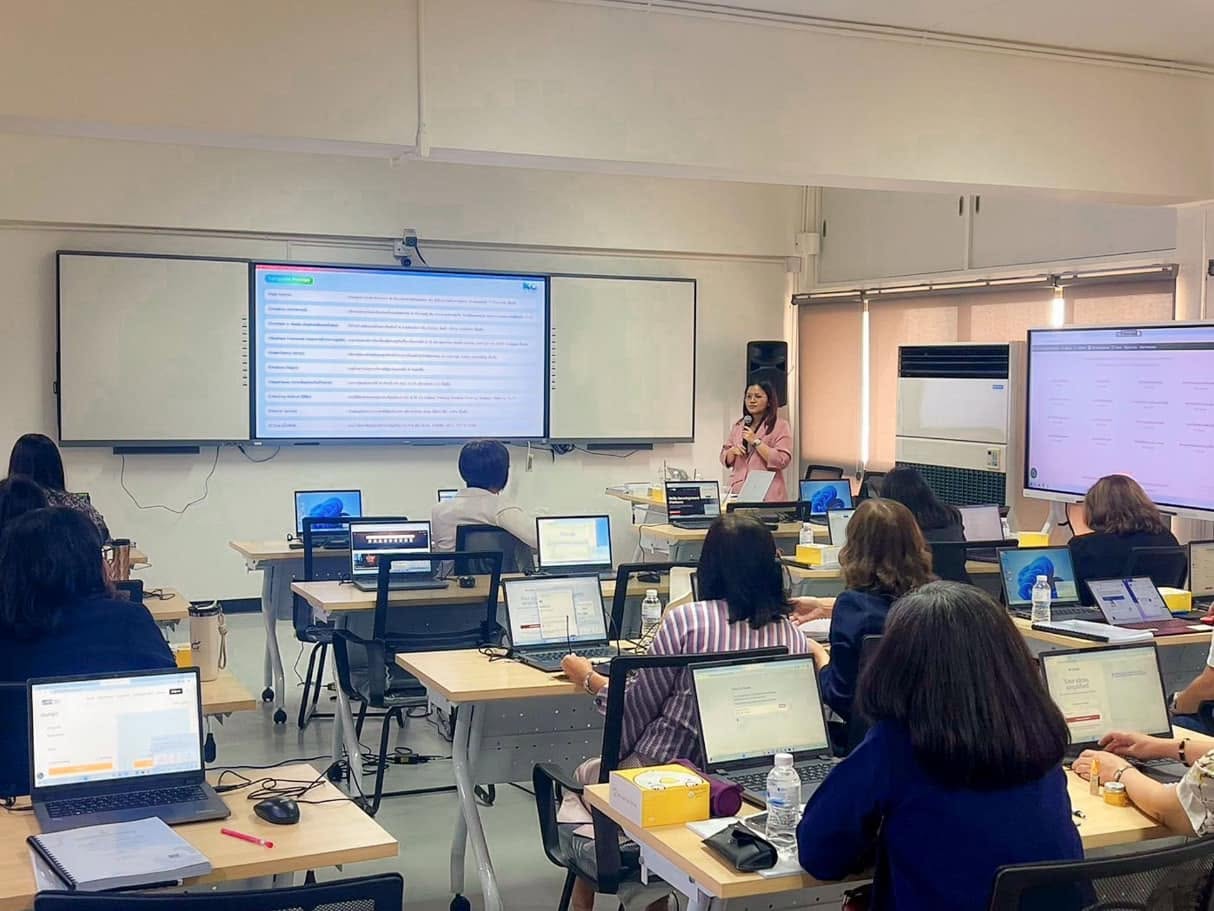
The AI for Research & Academia session is designed for universities, research teams and graduate students who want to use AI effectively and responsibly.
Frequently asked questions
Can AI be listed as a co-author on a research paper?
Generally no. Many leading publishers and COPE (Committee on Publication Ethics) state that AI tools cannot be authors because they cannot take responsibility for the work. Disclose AI use in the methods or acknowledgements as the journal requires.
Can AI help with quantitative analysis?
It can explain concepts, help write code or check procedures. But analyses such as CFA or SEM should be run and verified in reliable statistical software, and the researcher must interpret the results.
How far can AI help with a literature review?
It is useful for exploring ideas, grouping themes and summarizing papers you already have. You still need to read the original sources and verify every citation yourself.
- AI for Research
- Research Ethics
- Research Methodology
- Generative AI

About the author
Dr. Rattanaporn Saelee
Speaker on AI, business, investment and research. COO of Total IT Solution Co., Ltd., Ph.D. in Social Media Technology (Rangsit University) and Special Instructor in the university's Ph.D. program.